A Just Transition Must Be Planned from the Outset
Author : ICSP (SSH)
Note :
CONFERENCE HIGHLIGHTS
The 11th Sustainability Practitioner Conference (SPC) 2026 – “Driving Just Transition: From Strategy to Real Impact”
Session : Welcome Remarks
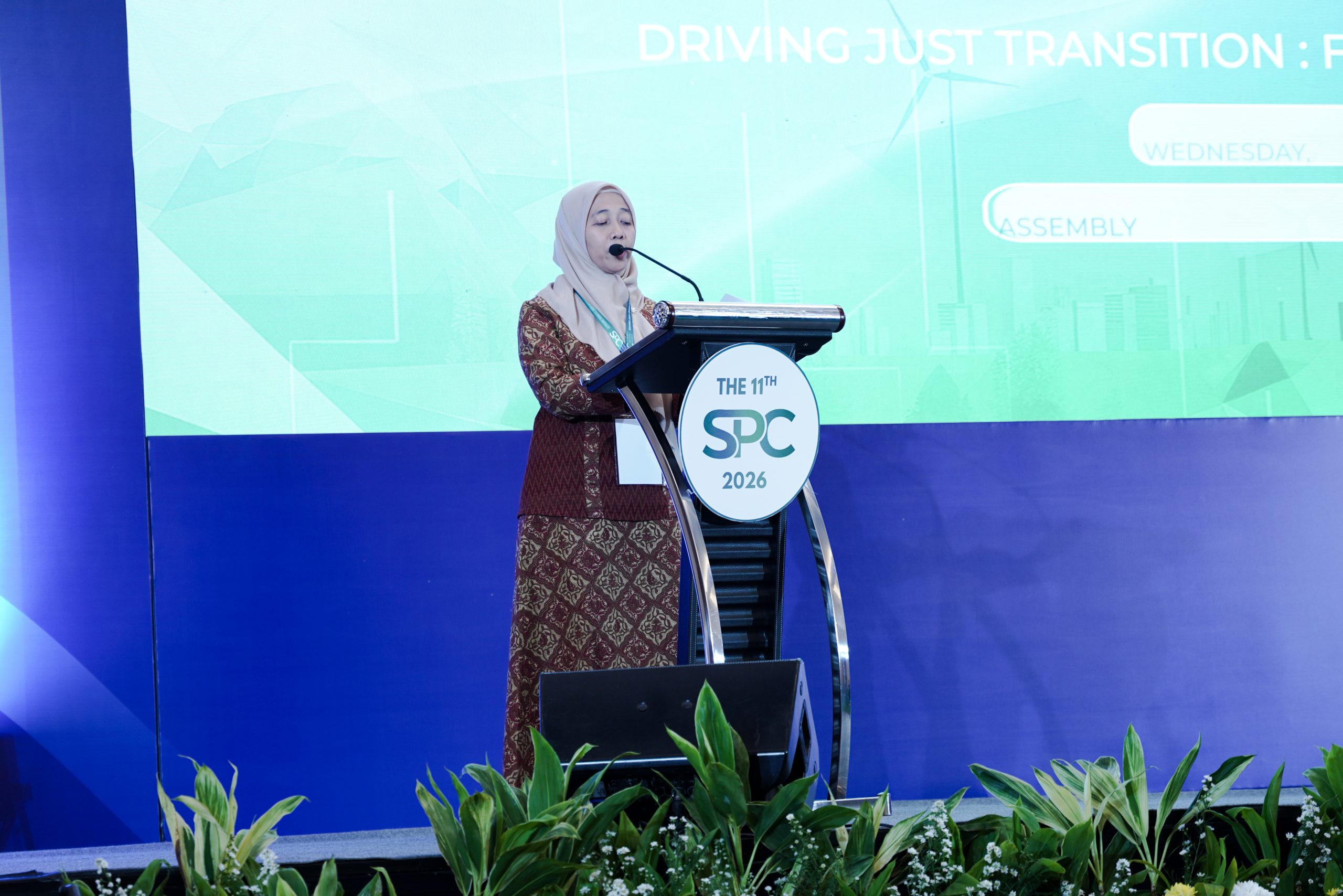
Chairperson, Board of Director, Institute of Certified Sustainability Practitioners (ICSP), Sylvia Veronica N.P. Siregar
Chairperson, Board of Director, ICSP, Sylvia Veronica N.P. Siregar, noted that the Sustainability Practitioner Conference (SPC) has, for more than a decade, served as an annual meeting point for practitioners from various sectors. The conference was designed together with the NCCR, and with the support of UN Global Compact Network Indonesia (IGCN), as a space to connect policy, professional practice, and real-world implementation. In her view, this year’s theme reflects urgent challenges.
“A just transition is not merely an environmental program supplemented by a social component at the end. It is a way to manage economic transformation: deciding how fast change should occur, where capital should be directed, whose perspectives should shape the process, how impacts should be assessed, and how institutions must remain accountable for the results achieved,” said Sylvia.
Sylvia assessed that the main challenge at present is the implementation gap: many organizations have announced ambitions, but real impact depends on the decisions that follow. For Indonesia, net zero targets, energy transition initiatives, and evolving sustainability disclosure requirements demand more than compliance, namely institutions capable of translating policy into feasible plans and accountable action.
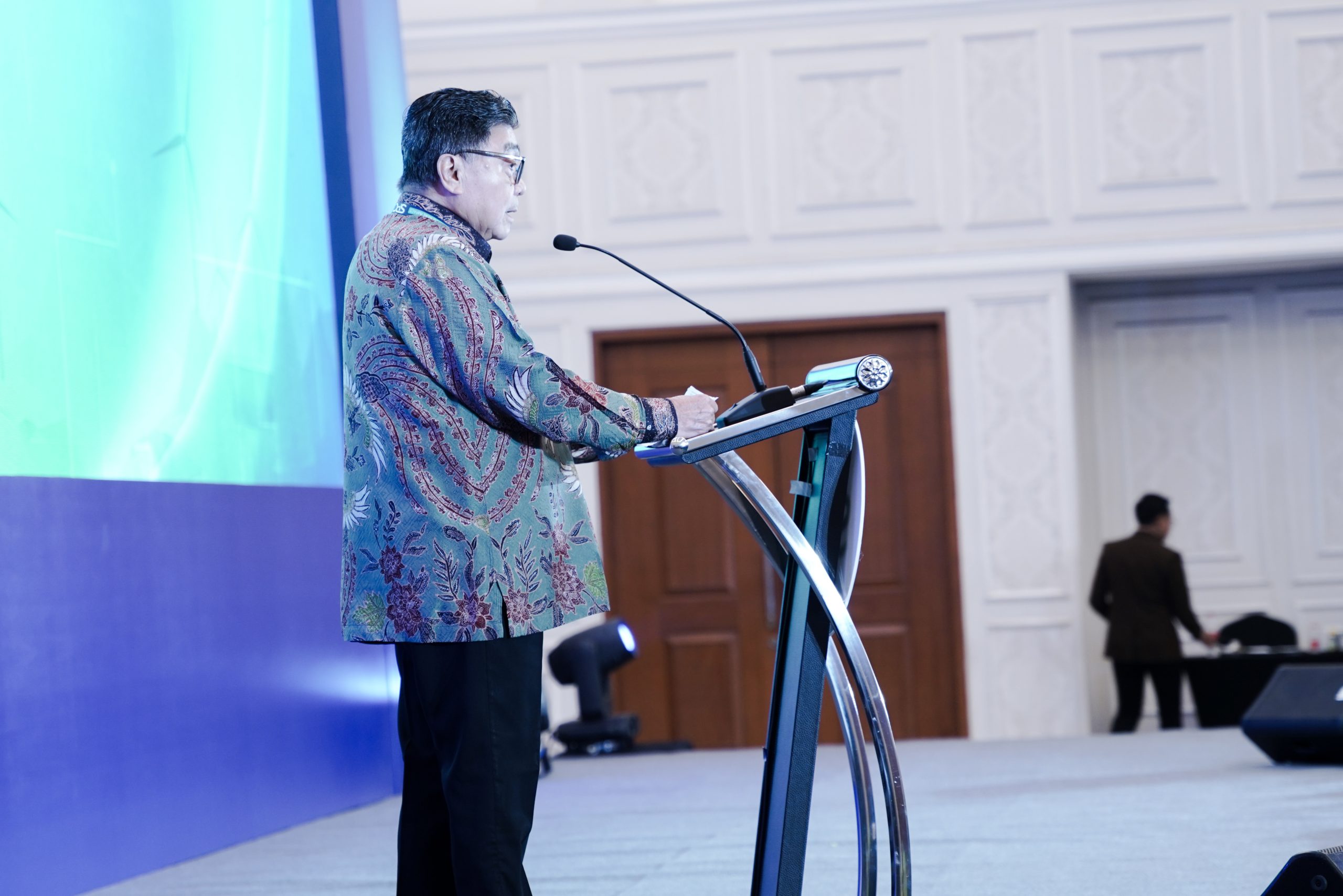
Executive Director, National Center for Corporate Reporting (NCCR), Ali Darwin
Executive Director, NCCR, Ali Darwin, reminded the audience that humanity faces five major, interrelated challenges: climate change and extreme weather; geopolitical conflict; inequality and social exclusion; biodiversity loss; and the combined crisis of food, water, and migration. Among them, climate change demands urgent and transformative action. In line with the 2015 Paris Agreement, development needs to be directed toward a low-carbon economy through clean energy, efficiency, ecosystem protection, and climate resilience.
“This transition must not focus solely on technology, investment, and emission reductions. It must also address the concerns of workers, communities, employment, and social justice. This is the main purpose of a just transition,” said Ali.
According to Ali, carbon-intensive industries may face declining demand and stranded assets, while the workers and communities that depend on them risk losing jobs and income. At the same time, renewable energy, sustainable transport, energy efficiency, the circular economy, and green technology open up opportunities for employment, investment, and innovation. Planning must therefore begin early.
“Just transition planning must be integrated into corporate strategy from the outset. Companies need to prepare as early as possible and develop a roadmap that is clear, measurable, and time-bound. This roadmap must cover emission reduction targets, investment needs, affected workers, vulnerable communities, future skills requirements, and a system for monitoring progress,” said Ali.
The planning process, Ali continued, must involve employees, trade unions, local communities, government, investors, and educational institutions, with social dialogue as the key, because workers and communities should not merely be recipients of decisions made elsewhere. A successful just transition must be grounded in fairness, inclusiveness, transparency, participation, accountability, and shared prosperity, so that no worker or community is left behind simply because the economic structure is changing.
This article is a CONFERENCE HIGHLIGHTS piece from The 11th Sustainability Practitioner Conference (SPC) 2026, “Driving Just Transition: From Strategy to Real Impact,” covering specifically the Welcome Remarks session.
This article is available in both English and Bahasa Indonesia. The Bahasa Indonesia version is provided to facilitate access for Indonesian readers.
Download the Indonesian Translation
Categorised in Media, Sustainability News & Updates. Submitted by ICSP Editor