Sustainability Reporting: A Tool for Building Trust in the Transition
Author : ICSP (SSH)
Note :
CONFERENCE HIGHLIGHTS
The 11th Sustainability Practitioner Conference (SPC) 2026 – “Driving Just Transition: From Strategy to Real Impact”
Session : Keynote Speech
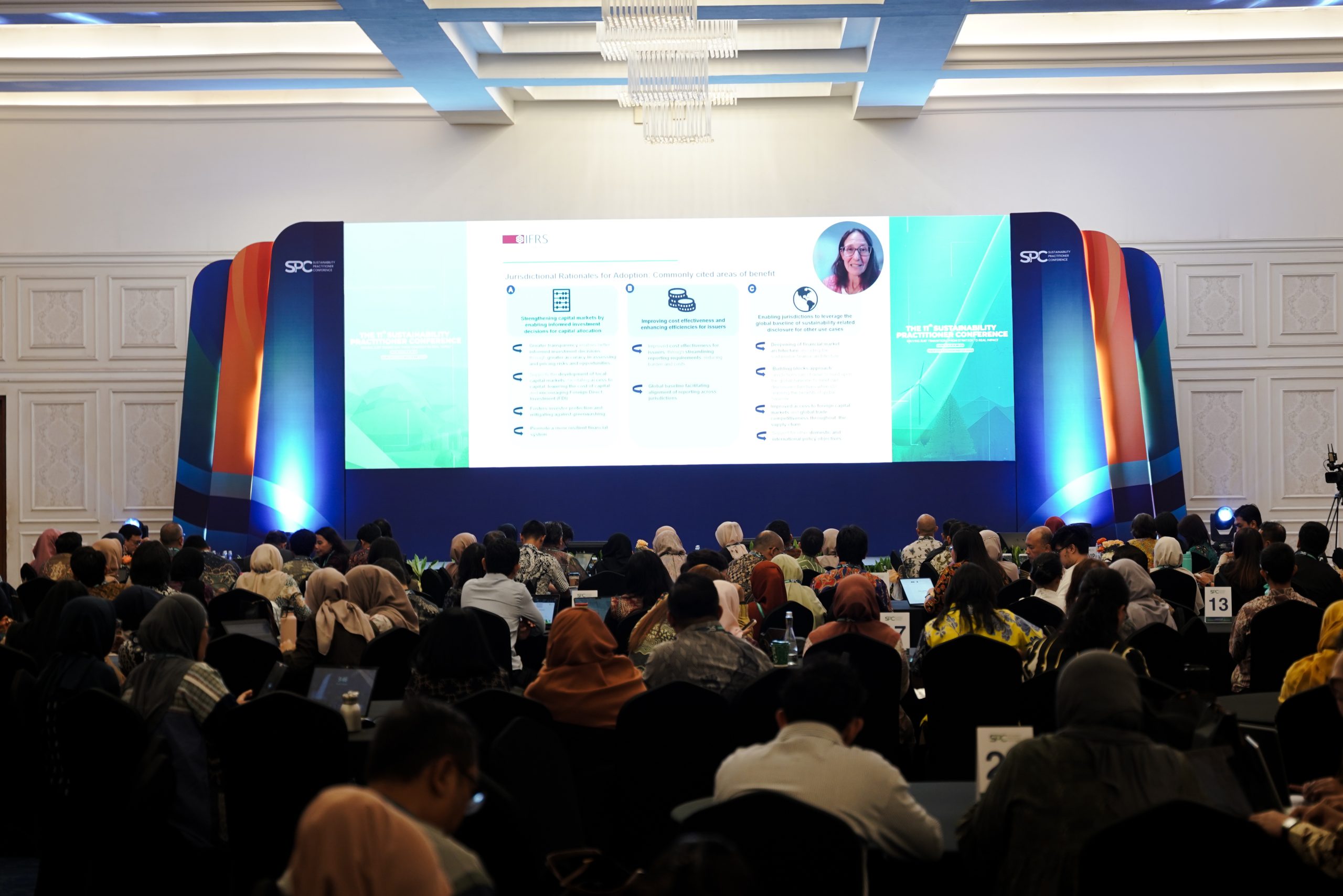
Director of Regulatory Implementation IFRS Foundation, explained that the ISSB Standards arose from market demand for information that is useful for decision-making and comparable. The primary stakeholder group is investors, but companies also benefit because the process of preparing the information helps them identify risks and opportunities and strengthens data governance. Many jurisdictions likewise encourage adoption to strengthen capital markets, improve issuer efficiency, and support other policy objectives.
“Taking all of these considerations together, more than 45 jurisdictions have decided to use, or are taking steps to use, the ISSB Standards within their legal or regulatory frameworks. That represents more than 60% of global GDP, 40% of global market capitalization, and 60% of global greenhouse gas emissions. The ISSB Standards have truly become a global baseline and support the information foundation on these issues,” said Emily.
The ISSB Standards comprise IFRS S1 on sustainability-related risks and opportunities and IFRS S2 on climate-related risks and opportunities. The two are inseparable and are built on the four pillars of the recommendations of the Task Force on Climate-related Financial Disclosures (TCFD): governance, strategy, risk management, and metrics and targets. For each climate-related risk, IFRS S2 requires companies to explain whether it is a physical risk or a transition risk, and then to disclose their strategy, changes to the business model and resource allocation, mitigation and adaptation efforts, climate scenario analysis, and Scope 1, 2, and 3 greenhouse gas emissions.
“It is important to emphasize here that the IFRS Standards do not require companies to set targets, nor do they require companies to have a transition plan. However, if a company has them, it is required to provide information about those targets and plans that is useful to investors’ decision-making,” said Emily.
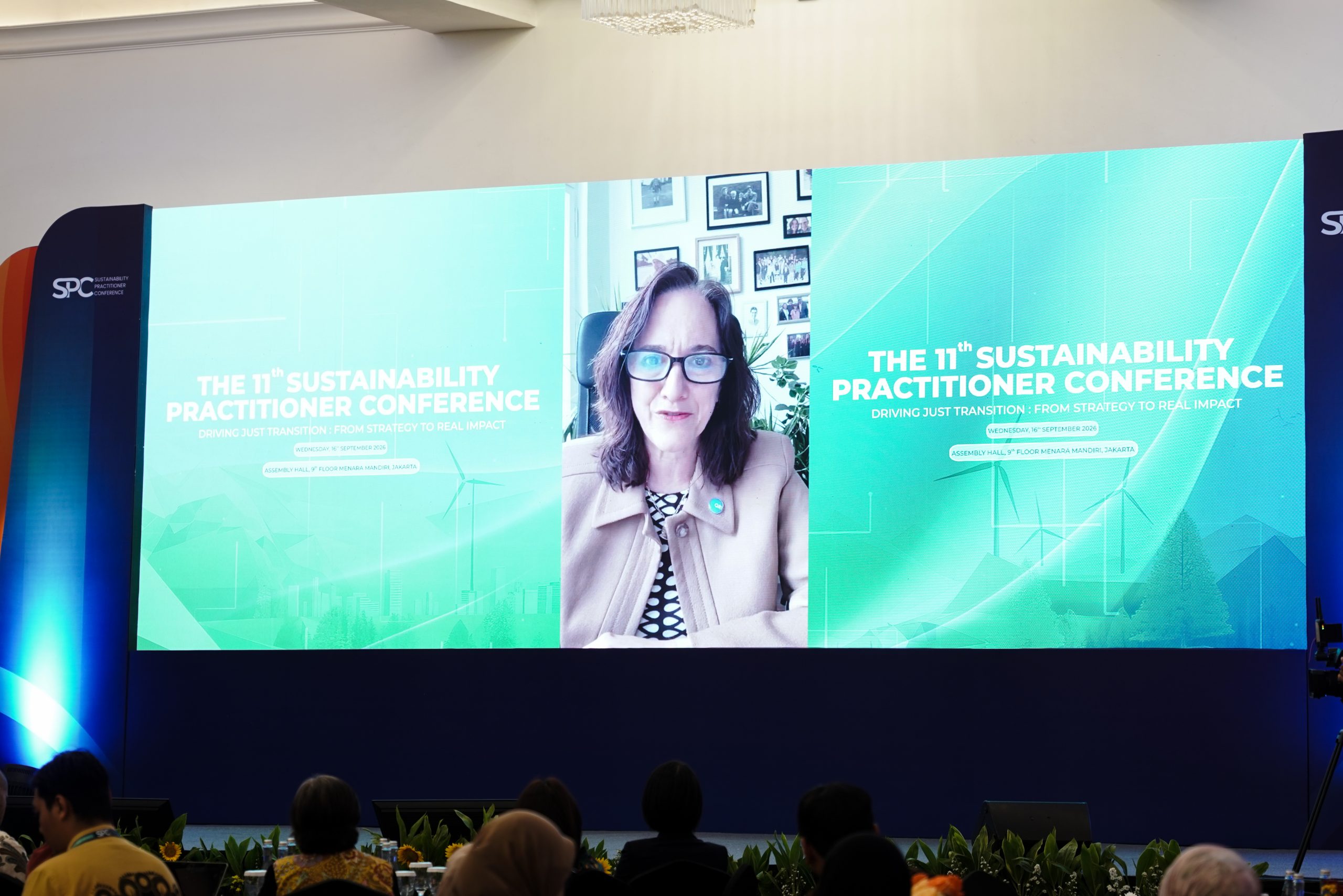
Meanwhile, CEO Global Reporting Initiative (GRI), Robin Hodess, emphasized that the fundamental question is no longer whether the transition will happen, but whether it proceeds fairly. She considered the issue relevant to Indonesia because many workers, businesses, and communities remain closely connected to the coal sector and energy-intensive industries. Therefore, the challenge is not merely to replace one energy source with another, but to manage change while protecting livelihoods and maintaining economic resilience.
“A transition that moves too quickly without adequate planning can cause social upheaval. A transition that moves too slowly can leave countries and companies facing rising climate, market, and investment risks. The challenge is to find the right balance,” said Robin.
Robin noted that a successful transition must advance three objectives at once: climate ambition, economic competitiveness, and the protection of workers, communities, and human rights. Stakeholders are increasingly asking how targets will be achieved, who will be affected, and how workers and communities are involved. This is where reporting plays its role: not as an end in itself, but as a tool for better management and decision-making, whose transparency builds trust.
This thinking is reflected in GRI 102: Climate Change, published in 2025, which recognizes that the climate transition and the just transition are inseparable. Together with its interoperability with IFRS S2, the standard is expected to help organizations navigate developments in sustainability disclosure in Indonesia, including the evolving sustainability reporting framework of Indonesia’s Financial Services Authority (OJK). Robin also linked it to Indonesia’s accession process to the Organisation for Economic Co-operation and Development (OECD) and to growing expectations for human rights due diligence, all of which require organizations to understand, manage, and communicate their impacts.
“A just transition is not a trade-off against growth; rather, it is the foundation for sustainable growth. Indonesia therefore has a unique opportunity to demonstrate that economic development, climate ambition, and social inclusion can reinforce one another. And the decisions made today will shape the future,” said Robin.
This article is a CONFERENCE HIGHLIGHTS piece from The 11th Sustainability Practitioner Conference (SPC) 2026, “Driving Just Transition: From Strategy to Real Impact,” covering specifically the Keynote Speech session.
This article is available in both English and Bahasa Indonesia. The Bahasa Indonesia version is provided to facilitate access for Indonesian readers.
Download the Indonesian Translation
Categorised in Media, Sustainability News & Updates. Submitted by ICSP Editor